Thursday, October 24, 2013

Weather: Rain Cycle & Clouds

We began our week learning about the rain cycle—how it is a continuous circle. The water on the earth is warmed by the sun and evaporates and floats up to the sky. The droplets bind together to make a cloud and as the droplets get larger and heavier they fall down to earth as rain…making puddles, filling rivers (etc), which get warmed by the sun…etc. We then acted out the rain cycle. We were the ocean, evaporated water vapor, clouds, and then rain. The children enjoyed acting it out. 

For science we did this Absorption Activity. The children enjoyed this hands-on experiment. 


To incorporate math we created a cloud and raindrop activity. The children were given clouds with different numbers on them and then had to match the same amount of rain drops with the numbers on the clouds.  


We also wrote out a chart comparing what we do when it is raining and when it is sunny outside. 


We also read The Cloud Book, by Tomie dePaola, which introduced the children to three different types of clouds. They then each made a cloud chart by using cotton balls.
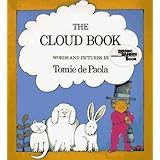
Product Details
Cumulus- the beautiful puffy clouds that you see on sunny days, 
Cirrus – stringy, elongated, white clouds that indicate a change in weather
Stratus – “stacked”, gray clouds. Stratus clouds are formed when clouds join together and they usually fill the sky. They indicate a storm is coming. 


We further explored Cumulus clouds by reading It Looked Like Spilt Milk. The book talked about how a cloud can look like different objects, even though it is just a cloud. The class made their very own cloud prints, with white paint, and decided what their cloud looked like to them.

Product Details

I found  this song online that we sang throughout the week: 

I’M A LITTLE CLOUD
Tune:  “I’m A Little Teapot”

I’m a little cloud, in the sky.
You can find me, way up high.
Sometimes I’m puffy and sometimes stretched out.
I just love to float about.


Friday, April 26, 2013

Community

This week we focused on our community and community workers. We learned that “a community is a place where many people live and work together. Community helpers are people who make communities cleaner, safer, and better” (Kalman). People in communities treat each other with respect and kindness, and help each other out. We discussed different people that work in our community, including: teachers, bakers, policemen, postal workers, and firefighters. We played a matching game where we matched the community worker to the tools they use for their job. 


We made our classroom into our own little neighborhood and the children played in different centers pretending to be community workers


At our writing table we had a post office. We made our own mailbox and wrote letters to mail. Everyone wrote a letter to a friend and told them something nice they like to do/ would like to do with their friend. At the end of the week we delivered our mail to our friends. 


In the block area we pretended to be construction workers, carefully and purposefully building various structures.


In the kitchen we pretended to be chefs and bakers. Earlier in the week we really were bakers, baking double chocolate and plain chocolate chip cookies. Later in the week we sold our cookies in our pretend bakery. We took a vote on how much our cookies should cost. We voted between 15¢, 17¢, and 25¢. Each vote was represented by a tally mark and after everyone voted we differentiated which choice had the most and which one had the least. 25¢ won! 

In dramatic play we pretended to be doctors taking care of the babies and each other with our doctor’s kit. 


Furthermore, each child shared what they would like to be when they grow up and how they would be helpful to their community.


Friday, April 19, 2013

Around the World

This week our class took a trip around the world to learn all about different countries and about different cultures and languages. We visited Italy, Japan and Kenya. On our plane ride to Italy we practiced using a few Italian phrases that we can use while talking to the natives. We learned that Buongiorno means Good morning, Gratzie means Thank you and Caoi means Goodbye. While in Italy we took a gondola ride through Venice and made delicious pizza out of tortilla wraps, tomato sauce and mozzarella cheese. Mmm! 


Our next stop on the globe was Japan. To become familiar with Japanese we learned some key words that would help up along our trip. We learned Konnichiwa means Hello, Arigato means Thank you and Sayonara means Goodbye. In Japan we learned that people eat with special utensils called chopsticks and some of their favorite foods to eat are sushi and rice. As a fun activity the children got to use rice in an art project. We mixed the rice into a bowl of paint and decorated our paper with red paint. The children got to see how it feels to paint with the texture of rice on their paper. As another fun activity we sorted some pompoms using ready to use chopsticks. The children had to match the colored pompom with the correct color plate. 


Our last stop this week was to Kenya, in Africa, to go on a safari. We remembered to practice our Swahili before arriving in Kenya. We learned Jumbo means Hello, Asante means Thank you and Kwaheri means Goodbye. We brought self-made binoculars on our trip to better spot the animals that we may come across. We ended up seeing a lot of the same animals that we sometimes see at the zoo, like lions, zebras, giraffes, and elephants. We loved seeing all the different animals, but made sure to keep our distance from them since they are wild animals. Our binoculars really came in handy!